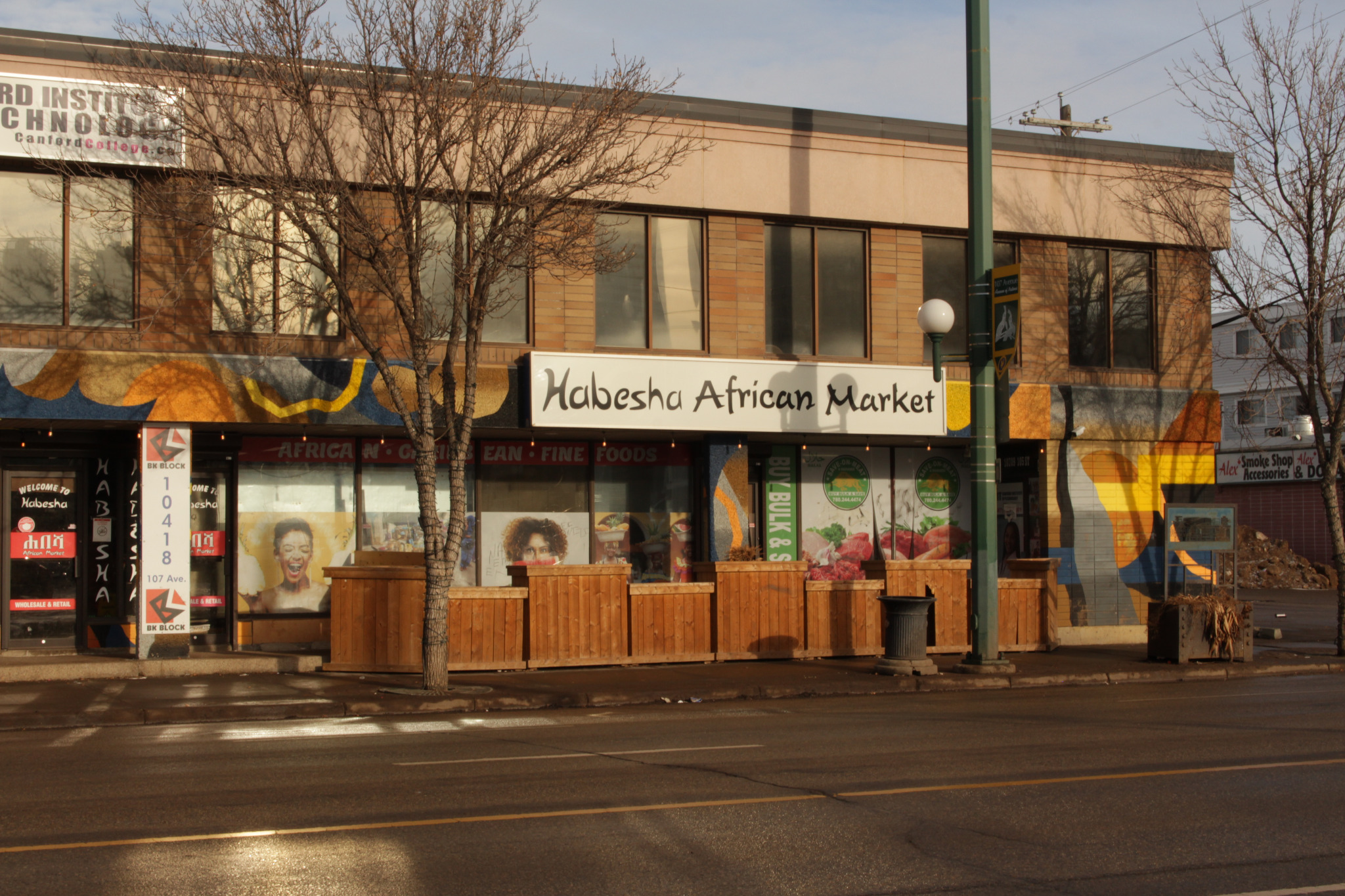
Vibrant Hub: Habesha African Market Aims to Redefine 107th Avenue
When I first stepped into Habesha African Market on 107th Avenue in Edmonton, I wasn’t sure what to expect. The area has a negative reputation, often criticized by those who have never walked its sidewalks or met its warm, welcoming residents and business owners. Locals, however, are weary of this stigma and eager to showcase their community’s potential.
The market’s exterior is striking, adorned with a vibrant graffiti mural by a local artist and a colourful storefront. Inside, shelves are lined with familiar grocery staples alongside unique offerings—herbs, spices, and products not typically found at major chains like Loblaws.
While browsing stacks of injera, a spongy Ethiopian flatbread, I was greeted by the store’s owner, Nunu Desalgne. Noticing my curiosity, she shared a recipe for Ethiopian lentils with injera and berbere, a spice blend akin to paprika.
Beyond running the market, Desalgne serves on the board of the 107th Avenue Business Association, advocating for the area’s transformation into a vibrant cultural hub. “There’s no reason we can’t become a cool place like Whyte Avenue, 124th Street, or Alberta Avenue,” she said.
To foster this vision, Desalgne has taken initiative. Last year, Habesha hosted an Africa Day festival in its parking lot, featuring vendors, food trucks, and African drummers. This year, she hopes to expand the event to the street. “We want people to visit this neighbourhood,” she explained. “You have to create reasons to draw them in. People don’t just say, ‘Let’s spend the day at Habesha.’ We need to make that happen.”
Desalgne believes the City of Edmonton isn’t doing enough to support the area, leaving it feeling neglected. While programs like one covering repair costs for damaged business windows are a start, she argues they fall short. “It feels like they’re segregating this neighbourhood,” she said. “Social services are concentrated here, but there’s not enough support for residents or businesses. What’s the long-term plan? How are you supporting us and those who are struggling? This is Canada—shouldn’t we do better? Why must I wait until retirement to enjoy a coffee in a friend’s yard?”
Despite limited municipal support, Desalgne and Habesha are driving revitalization efforts. They’ve cleaned up local parks, connected residents and newcomers with services through organizations like Action for Healthy Communities and the All Nation Centre, and cultivated a safe, welcoming environment in the store.
Before the pandemic, Habesha offered hot food and hosted Ethiopian coffee ceremonies on Sundays. Desalgne plans to revive these traditions. “It’s all about food,” she said. “People are excited to try new things, and African culture is gaining traction, starting with food and music. This neighbourhood is diverse—if you want to explore culture, this is the place to be.”
Nunu Desalgne’s vision to transform 107th Avenue into a cultural hub is inspiring, but without greater city support, it remains a challenging endeavour. Her efforts, however, shine brightly in a community ready to redefine itself.
Post a comment